
Author: Galatia Kokkali
Political crises rarely remain confined within national borders in a modern interconnected world. Domestic legislation that affects fundamental human rights often generates international concern, particularly when allegations of discrimination or apartheid are involved. The adoption of Israel’s 2026 death penalty law is a case that sparked strong reactions from international organizations, human rights bodies, legal associations, and some governments worldwide. While the controversy surrounding the legislation has been discussed primarily from a human rights perspective, it also offers an important opportunity to examine the broader role of international organizations in conflict prevention and crisis management.
Negotiation remains one of the most important alternatives to violence in international relations. According to Pfetsch (2007), international negotiations have evolved beyond traditional bilateral diplomacy into complex multilevel processes involving states, international organizations, civil society actors, and regional institutions. Modern political conflicts are rarely resolved through unilateral action alone; rather, they require structured dialogue among multiple stakeholders operating within international frameworks (Pfetsch, 2007, p. 7). Conflicts themselves constitute the starting point of negotiations and emerge because parties hold divergent interests regarding political, territorial, legal, or ideological issues. Since conflicts develop over time rather than appearing suddenly, opportunities for intervention exist at multiple stages. Effective negotiation therefore allows actors to address tensions before they escalate into violence or broader humanitarian crises (Pfetsch, 2007, pp. 8-9).
International organizations perform functions that extend well beyond facilitating negotiations. Abbott and Snidal (1998) argue that international organizations influence state behavior through the creation of norms, rules, information-sharing mechanisms, and institutional frameworks that enable cooperation. One of the most significant contributions of international organizations is their ability to act as neutral trustees in conflict situations. The United Nations, for example, has traditionally performed peacekeeping and monitoring functions designed to separate conflicting parties, supervise ceasefires, and prevent the recurrence of violence (Abbott & Snidal, 1998, p. 21). Such activities contribute not only to conflict management but also conflict prevention by creating institutional mechanisms through which disputes can be addressed peacefully.
The concept of preventive diplomacy provides an especially useful framework for understanding the role of international organizations in contemporary crises. According to the United Nations, preventive diplomacy refers to diplomatic actions designed to prevent disputes from escalating into conflicts and to limit the spread of conflicts when they occur (McGearty & Macchiarini-Crosson, 2023, p. 11). Modern approaches to conflict prevention recognize that conflict should not be understood solely as the outbreak of violence. Instead, conflict is viewed as a dynamic process that develops through various stages, each of which presents opportunities for intervention (McGearty & Macchiarini-Crosson, 2023, pp. 11-16). This perspective has encouraged international organizations to focus not only on crisis response but also early warning, mediation, peacebuilding, and reconciliation. The Responsibility to Protect (R2P) doctrine offers an additional theoretical lens through which to evaluate international responses to human rights concerns, particularly where the death penalty is imposed in ways that may constitute serious violations of the right to life. R2P establishes that states bear the primary responsibility for protecting their populations from genocide, war crimes, ethnic cleansing, and crimes against humanity. At the same time, the international community has a responsibility to assist states in fulfilling these obligations and to respond when populations face serious risks of mass atrocities (Roșior, 2025, p. 130). Although R2P does not constitute a binding rule of customary international law, it has gained broad political acceptance and serves as an important normative framework for international action (Roșior, 2025, p. 139).
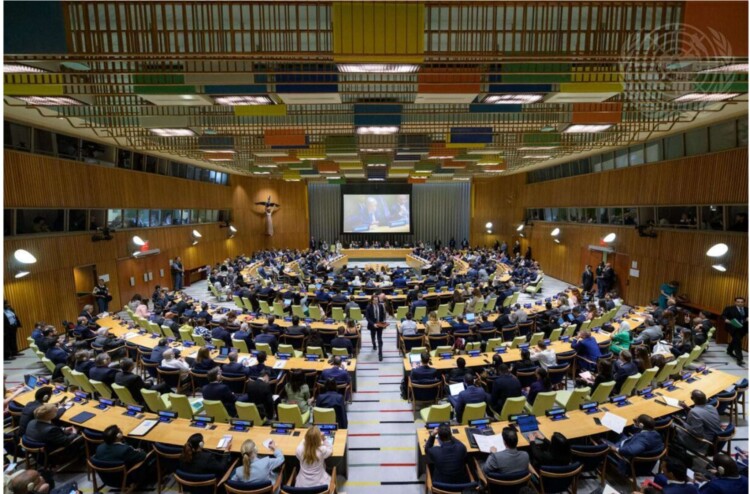
The international reaction to Israel’s death penalty law illustrates the relevance of these observations. Rather than advocating confrontation, numerous international actors called for diplomatic engagement, legal review, and policy reconsideration, emphasizing the need for dialogue as a means of addressing concerns regarding human rights and discrimination (Amnesty International, 2026; OHCHR, 2026a). The United Nations High Commissioner for Human Rights, the Council of Europe, Amnesty International, Human Rights Watch, and the International Bar Association all expressed concerns regarding the law’s compatibility with international human rights standards. These interventions illustrate how international organizations and transnational actors seek to uphold shared normative commitments through diplomatic engagement rather than coercive confrontation. The controversy surrounding the law highlights the practical relevance of preventive diplomacy. Human rights organizations and international institutions called for immediate engagement before the implementation of the law could contribute to greater political polarization or further deterioration in relations between Israelis and Palestinians. Such responses reflect the preventive logic that intervention is most effective before tensions become entrenched and more difficult to resolve.
In conclusion, the international response to Israel’s 2026 death penalty law demonstrates the continuing relevance of international organizations in preventing crises and protecting human rights. Theoretical perspectives on international negotiation, institutional cooperation, preventive diplomacy, and the R2Pt all highlight the importance of early engagement, multilateral dialogue, and international oversight in managing politically sensitive disputes. Taken together, the abovementioned perspectives suggest that international organizations are most effective when they act proactively rather than reactively. Through mediation, dialogue, monitoring, and norm promotion, they can help prevent crises from escalating while strengthening the protection of human rights. The debates surrounding Israel’s death penalty law therefore offer a broader lesson for international relations; meaningful negotiations and preventive diplomatic engagement remain indispensable tools for maintaining peace, protecting human dignity, and reducing the risk of future conflict.
References
Abbott, K. W., & Snidal, D. (1998). Why states act through formal international organizations. Journal of Conflict Resolution, 42(1), 3–32. https://doi.org/10.1177/0022002798042001001
Amnesty International. (2026). EU/Israel: Adoption of death penalty law by the Israeli Knesset requires urgent EU measures – Joint statement. https://www.amnesty.org/en/latest/news/2026/04/eu-israel-adoption-of-death-penalty-law-by-the-israeli-knesset-requires-urgent-eu-measures-joint-statement/
Council of Europe. (2026). Parliamentary Assembly condemns Israeli law which expands the death penalty in a discriminatory way. https://www.coe.int/en/web/portal/-/parliamentary-assembly-condemns-israeli-which-expands-the-death-penalty-in-a-discriminatory-way-
Death Penalty Information Center. (2026). Israel’s new law allows for publicized death penalty trials for Palestinians charged with October 7th attacks. https://deathpenaltyinfo.org/israels-new-law-allows-for-publicized-death-penalty-trials-for-palestinians-charged-with-october-7th-attacks
The Guardian. (2026). Israel death penalty law condemned by Council of Europe rights body. https://www.theguardian.com/world/2026/apr/22/israel-death-penalty-law-rights-body-council-of-europe
Human Rights Watch. (2026). Israel: Discriminatory death penalty bill passes. https://www.hrw.org/news/2026/03/31/israel-discriminatory-death-penalty-bill-passes
Institute for Middle East Understanding. (n.d.). 5 questions for an expert: Israel’s new death penalty law. https://imeu.org/perspectives/apartheid/5-questions-for-an-expert-israels-new-death-penalty-law/465
McGearty, S., & Macchiarini-Crosson, D. (2023). The EU’s preventive diplomacy: Practice makes (not yet) perfect? Directorate-General for External Policies of the Union, Policy Department for External Relations, European Parliament. https://www.europarl.europa.eu/RegData/etudes/IDAN/2024/754441/EXPO_IDA(2024)754441_EN.pdf
Office of the United Nations High Commissioner for Human Rights. (2026). Israel’s discriminatory death penalty law marks grave human rights concerns. https://www.ohchr.org/en/press-releases/2026/05/israels-discriminatory-death-penalty-law-marks-grave-human-rights
Pfetsch, F.R. (2007). Negotiating Political Conflicts. Palgrave Macmillan.
Roșior, C. (2025). The responsibility to protect. ISSNE 2603-1463. Vol.7 (5) 2023 Cross-border Laws and Regulations. Across Journal. https://doi.org/10.35219/across.2023.5.10
United Nations. (2026). Adoption of death penalty law by the Israeli Knesset requires urgent EU measures – Joint statement. https://www.un.org/unispal/document/adoption-of-death-penalty-law-by-the-israeli-knesset-requires-urgent-eu-measures-joint-statement-2april2026/
Manuel Elías. (2025). UN Photo. https://www.un.org/unispal/high-level-conference-two-state-solution-july2025/